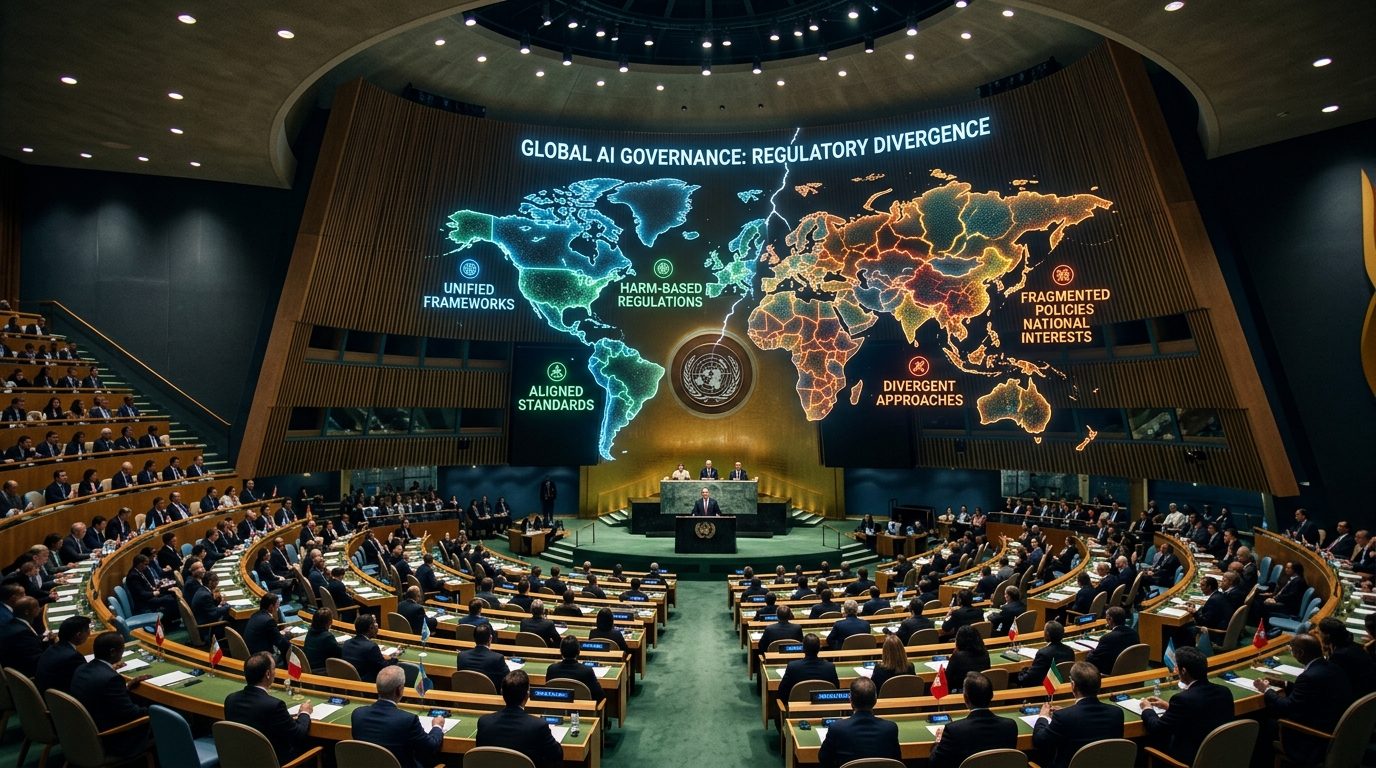
During high-level multilateral discussions at the United Nations General Assembly in New York, the United States formally closed the door on the creation of a centralized, international regulatory body for artificial intelligence.
The proposal, championed by UN Secretary-General António Guterres and supported by delegations across the European Union, envisioned a global AI agency modeled after the International Atomic Energy Agency (IAEA) to monitor compute clusters, inspect safety red-teaming protocols, and enforce harmonized deployment thresholds.
The initiative had received prominent backing from the leaders of America's frontier labs. OpenAI chief executive Sam Altman and Anthropic co-founder Dario Amodei participated in panel discussions urging international coordination, warning that a patchwork of conflicting regional regulations would fragment technical standards and increase existential risk.
However, the US administration delivered a definitive rebuke. White House technology advisor Michael Kratsios declared that the United States would not subordinate its domestic technological leadership to multinational oversight, emphasizing that sovereign nation-states must retain sole discretion over AI innovation.
American officials framed the decision through the lens of great-power competition. With Chinese foundation models such as Qwen 3.8 and DeepSeek V4 advancing rapidly across global open-source leaderboards, US policymakers argued that binding UN bureaucratic treaties would tie the hands of American innovators while proving unenforceable against authoritarian adversaries.
The refusal cements an irreversible split in the global regulatory landscape. Multinational enterprises must now navigate a bifurcated reality: rigorous pre-deployment audits, transparency mandates, and severe non-compliance penalties under the EU AI Act, contrasted with light-touch, market-driven self-attestation in the United States.