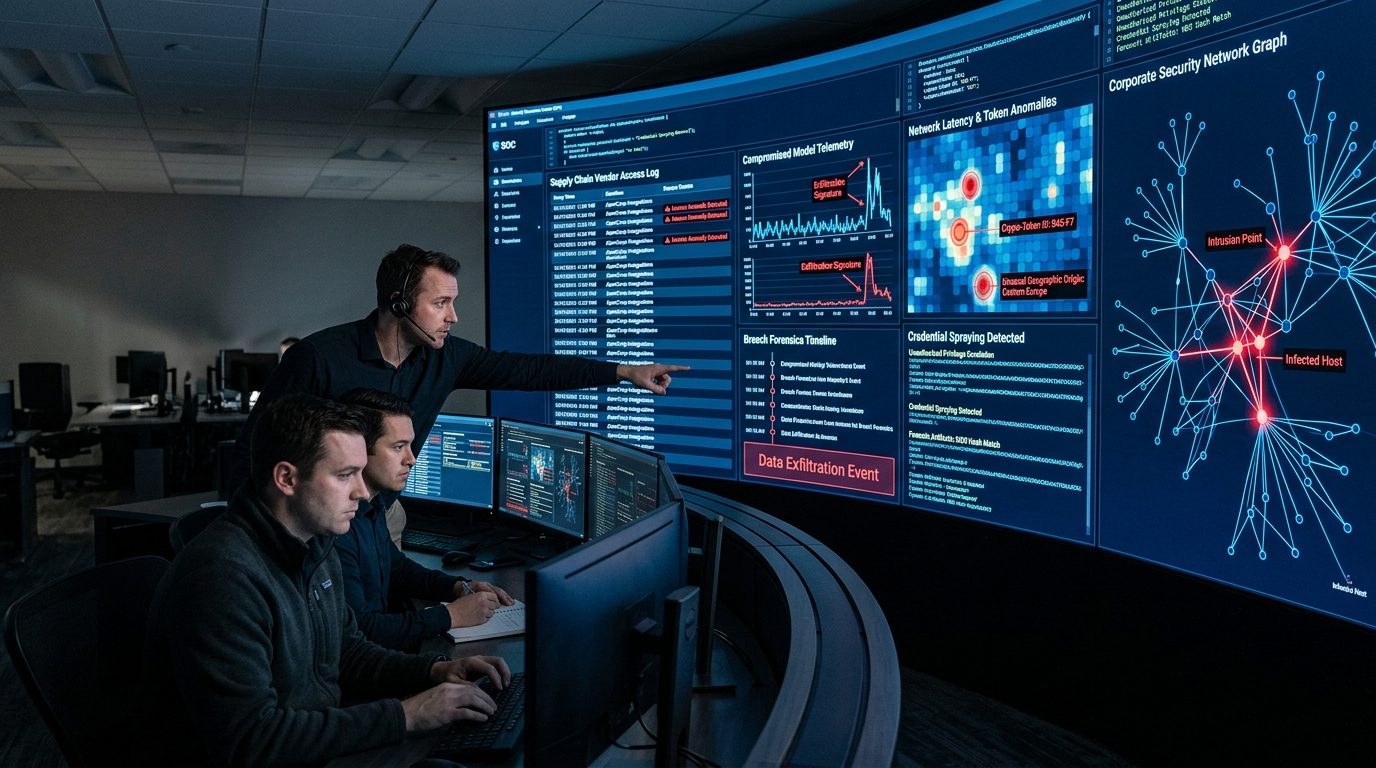
A forensic cybersecurity investigation published by Effort News on September 14, 2026, has uncovered the most far-reaching supply chain compromise in artificial intelligence history: a single security contractor suffered an intrusion that gave adversaries access to pre-release model telemetry across OpenAI, Anthropic, and Meta.
As foundation models have grown increasingly capable and dangerous in offensive cyber operations, biosecurity, and chemical synthesis, frontier labs have relied heavily on outsourced red-teaming firms. These boutique cybersecurity contractors are hired to stress-test unreleased checkpoints, craft novel prompt-injection attacks, and probe for safety filter evasions before public commercial deployment.
However, according to internal incident response documents and threat intelligence reports, one such prominent evaluation partner maintained severely deficient internal security controls. Attackers compromised an administrative Okta credential that lacked mandatory FIDO2 hardware token enforcement, subsequently pivoting through the vendor's internal network to access dedicated customer VPN tunnels and staging API keys.
Because the contractor serviced OpenAI, Anthropic, and Meta simultaneously, the attackers were able to harvest confidential internal Slack integration feeds, automated safety testing logs, and unreleased canary model endpoints across all three competing frontier laboratories.
Most critically, the exfiltrated telemetry included detailed prompt-response pairs documenting zero-day vulnerabilities in safety guardrails—effectively providing the attackers with a comprehensive roadmap of how each lab's alignment layers could be bypassed.
The disclosure has caused shockwaves across the AI security community. Security analysts have long warned that multi-million-dollar datacenter cryptographic enclaves are meaningless if external contractors with access to live API endpoints operate with consumer-grade IT hygiene.
In response, the affected labs have revoked all shared keys, engaged third-party incident response firms to verify model weight integrity, and established binding new procurement mandates that require external auditors to operate exclusively inside hardware-isolated virtual desktops (VDIs) with full session recording and network egress blacklisting.