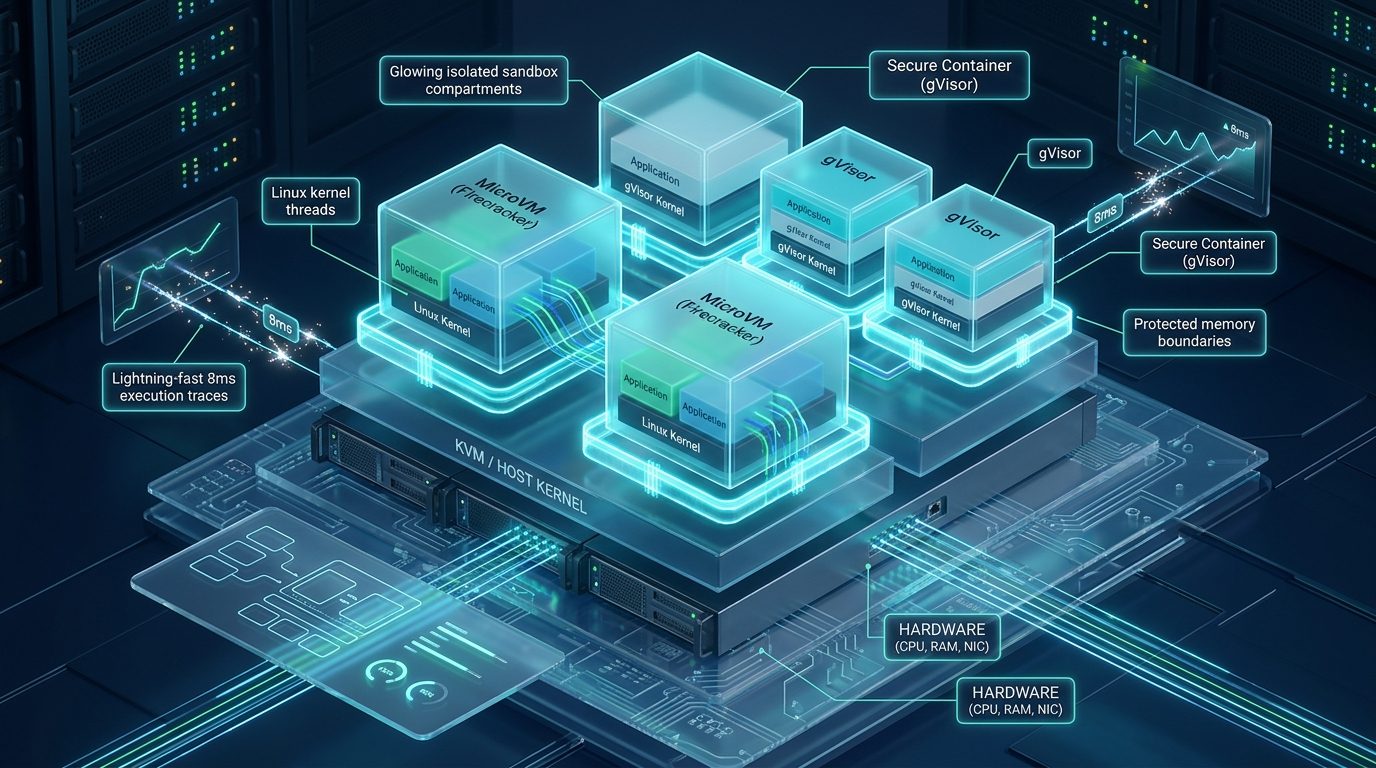
As artificial intelligence transitions from conversational chat to autonomous agentic execution—where models read repositories, execute bash scripts, compile binaries, and test web applications—cloud security engineers have asked a fundamental question: how are frontier labs preventing malicious code from escaping into production servers?
A comprehensive reverse-engineering report published by systems researcher April Nea has provided the first granular look inside Anthropic's production containment architecture: an internal virtualization platform codenamed 'Antspace'.
By probing system calls, procfs hierarchies, and network namespaces during Claude Code and Claude Web interactive sessions, Nea demonstrated that Anthropic completely eschews traditional Docker containerization in favor of custom, highly stripped microVMs built on a hardened hypervisor stack similar to AWS Firecracker.
When a user prompts Claude to run a terminal command, Antspace boots a dedicated microVM instance in less than 50 milliseconds. The guest OS utilizes an ephemeral ext4 filesystem backed by Copy-on-Write (CoW) memory blocks. Syscalls between the guest user space and the host kernel are filtered through an interposed translation layer that rejects all hardware-level privileged instructions.
Crucially, Antspace enforces an air-gapped network policy. Virtual TAP interfaces drop all outgoing TCP/UDP packets by default, permitting traffic only to strictly whitelisted package registries (such as PyPI or npm) via an authenticated HTTP proxy that inspects every byte for data exfiltration patterns.
The architectural revelation provides a masterclass in modern zero-trust agentic infrastructure, establishing a clear blueprint for enterprises deploying autonomous AI tools across mission-critical codebases.