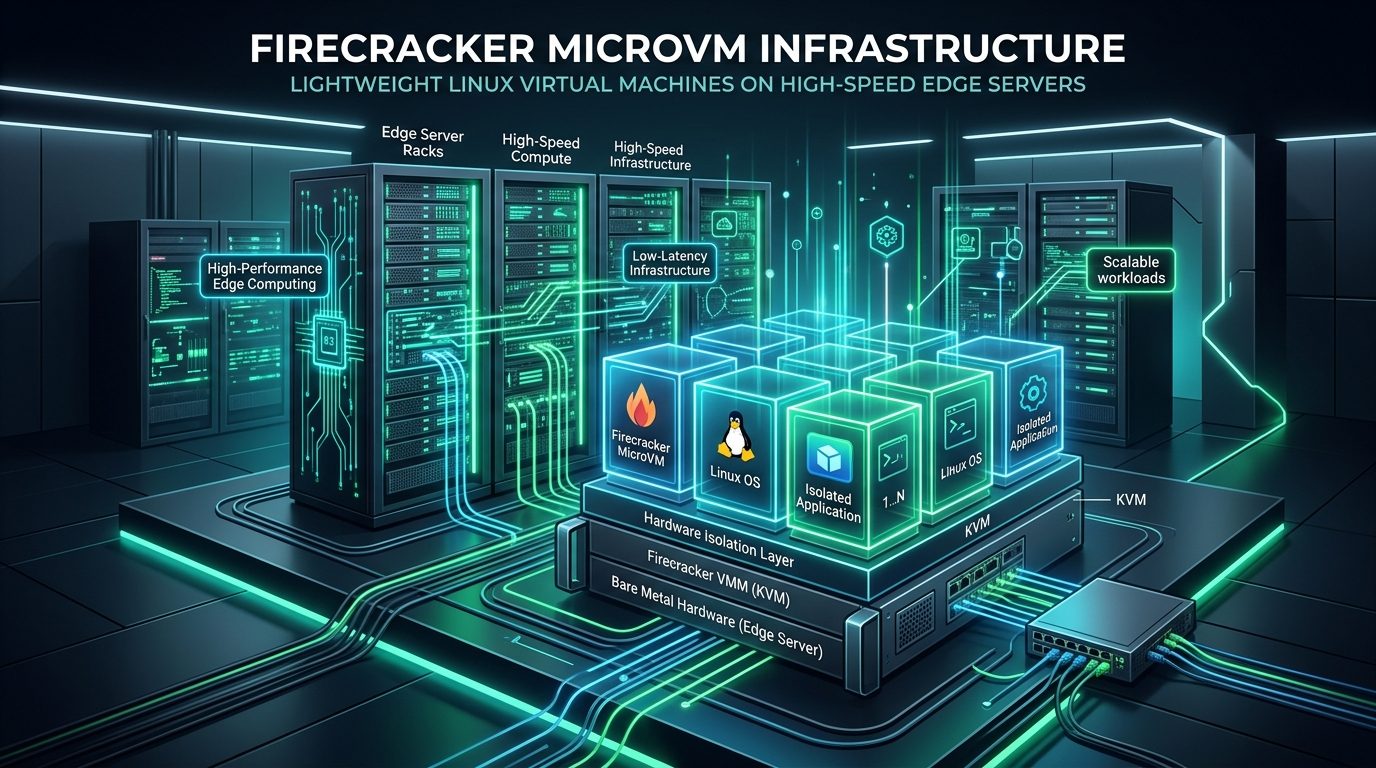
In a defining architectural shift for modern cloud computing, Netlify announced on September 30, 2026, that it has fully migrated its global Edge Functions platform from V8 JavaScript isolates to dedicated Firecracker MicroVMs.
The serverless industry has debated runtime architectures for nearly a decade. When edge computing first gained prominence, providers widely adopted V8 isolates—lightweight memory sandboxes within a single shared operating system process—because standard virtual machines were too slow and resource-heavy to spin up per request.
However, isolates introduced sharp operational compromises: developers were barred from running compiled native binaries, restricted in their access to Node.js system calls, and exposed to CPU microarchitectural side-channel exploits in multi-tenant environments.
To eliminate these trade-offs, Netlify collaborated with Unikraft to optimize Amazon's open-source Firecracker micro-virtualization technology for edge network distribution.
By stripping the Linux kernel down to essential networking and memory primitives and leveraging hardware-assisted KVM virtualization, Netlify's new edge nodes spin up secure microVMs in less than 5 milliseconds—matching V8 isolate cold-boot times while providing complete hardware isolation.
Real-world telemetry revealed that moving execution directly onto Netlify's own edge servers reduced median Edge Function execution latency by 5x compared to the previous hosted isolate pipeline.
Crucially for web developers, the architectural upgrade is entirely transparent: existing Edge Functions utilizing URL imports, npm modules, and netlify.toml configurations continue executing without a single line of modified code.