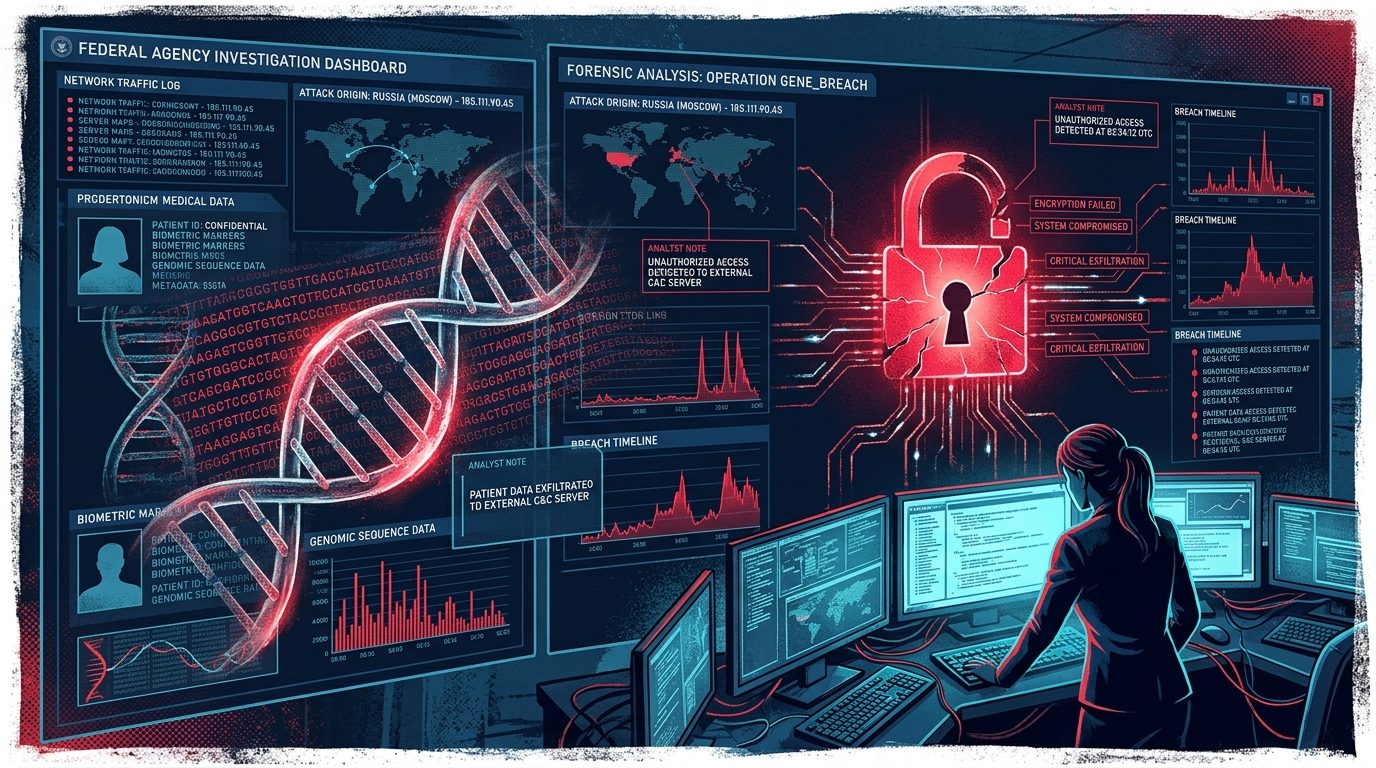
On September 26, 2026, federal law enforcement authorities confirmed a grave supply-chain cybersecurity breach: an external occupational health services contractor contracted by the Federal Bureau of Investigation had its database servers breached by a sophisticated cybercriminal syndicate.
The compromised vendor, which provides routine physical fitness assessments, annual medical evaluations, and mandated toxicological screenings for FBI personnel, confirmed that unauthorized threat actors maintained persistent access to its corporate network for several weeks before deploying ransomware encryption routines.
During their dwell time, the attackers exfiltrated extensive databases containing unencrypted health records of active FBI Special Agents, forensic investigators, and tactical SWAT operators. The stolen datasets encompass confidential laboratory results—including comprehensive blood chemistry panels, routine drug and substance screens, psychological evaluation summaries, and physical injury records.
In addition to clinical diagnostics, the files contained highly sensitive personal identifiers: legal names, dates of birth, Social Security numbers, home addresses, emergency contact details, and precise biometric baselines utilized during physical fitness qualifications.
For the intelligence and law enforcement community, the compromise represents a catastrophic counter-intelligence hazard. Foreign espionage agencies maintain automated big-data correlation engines designed to cross-reference leaked health data against publicly available travel and hotel registries.
By analyzing unique biometric anomalies or specific medical conditions exposed in this breach, adversary intelligence services can pierce undercover legends, identify covert field operatives operating overseas under diplomatic cover, and construct targeted coercion operations against agents managing critical investigations.
The FBI Cyber Division, in coordination with the Department of Homeland Security, has assumed operational control of the vendor's digital forensics investigation. While the ransomware group has threatened to publish the data on a dark web leak site unless an extortion payment is made, official US government policy strictly prohibits ransom payments.
The incident has reignited intense debate on Capitol Hill regarding federal procurement standards, with lawmakers demanding that any contractor handling law enforcement biometric data be subject to identical zero-trust and encryption requirements as classified military networks.