On September 28, 2026, the Chinese Academy of Sciences (CAS) formally unveiled its comprehensive science and technological development blueprint for China's upcoming 15th Five-Year Plan (2026–2030), articulating the nation's strategic roadmap for scientific self-reliance.
Presented in Beijing following an extraordinary plenary session of the Academy's presiding council, the blueprint prioritizes five decisive technological domains intended to insulate the country against external trade embargoes while capturing global scientific leadership.
The first pillar focuses on breakthrough semiconductor lithography. Acknowledging the strict export controls blocking access to ASML High-NA EUV systems, CAS announced coordinated state consortia dedicated to validating high-throughput multi-beam electron projection and particle-beam lithography capable of patterning sub-2nm features without traditional reflective optics.
In artificial intelligence, CAS signaled an official pivot away from brute-force dense transformers toward bio-inspired spiking neuromorphic chips and sovereign foundation models trained on specialized scientific knowledge graphs rather than commercial internet text.
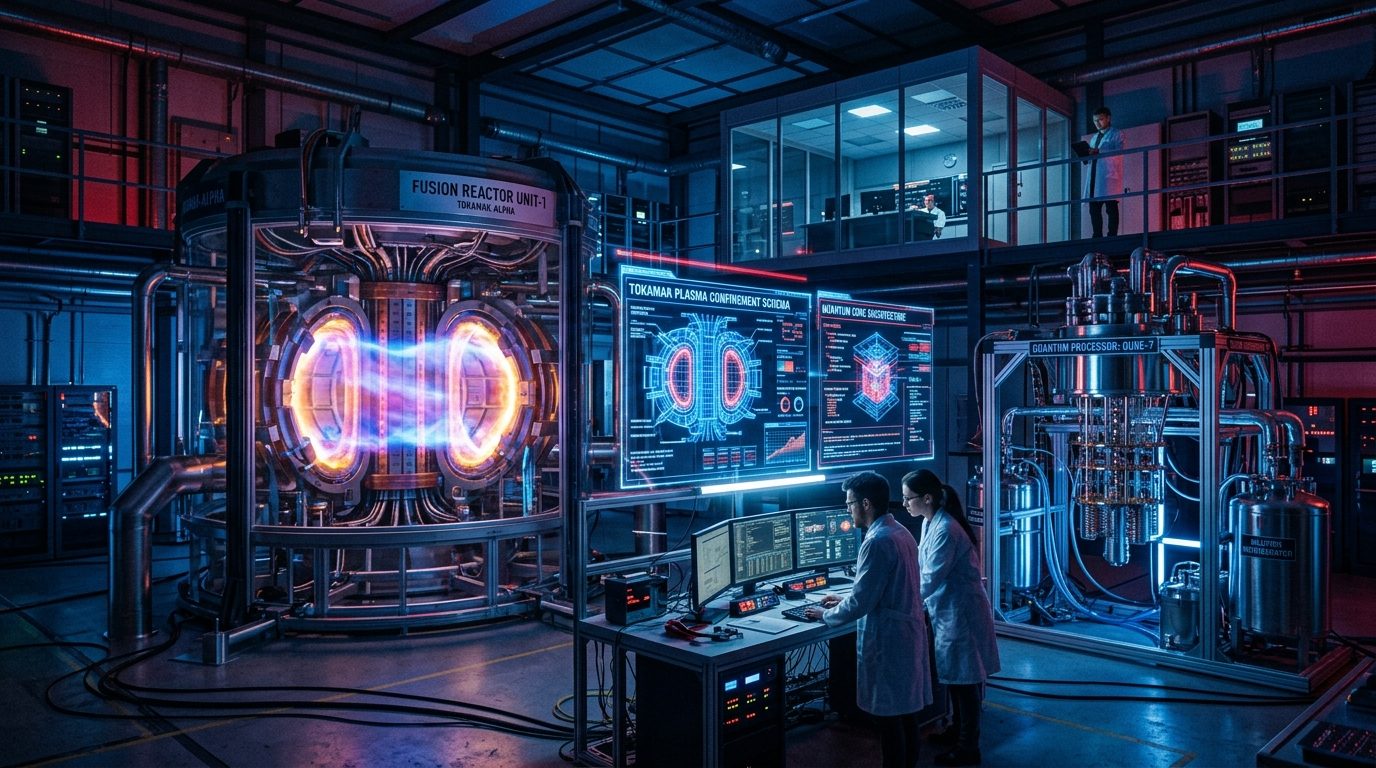
The plan also sets aggressive milestones for magnetic confinement fusion. Researchers operating the Experimental Advanced Superconducting Tokamak (EAST) in Hefei are tasked with achieving continuous 1,000-second steady-state plasma burn cycles at temperatures exceeding 120 million degrees Celsius by 2028.
In quantum engineering, the blueprint outlines the construction of an inter-provincial optical quantum repeaters network linking Beijing, Shanghai, and Guangzhou, scaling quantum-secured communications across a 5,000-kilometer footprint.
The final strategic domain establishes dedicated clinical testing facilities for invasive brain-computer interfaces (BCIs), aiming to deploy 10,000-channel neural sensor arrays for spinal cord injury rehabilitation.