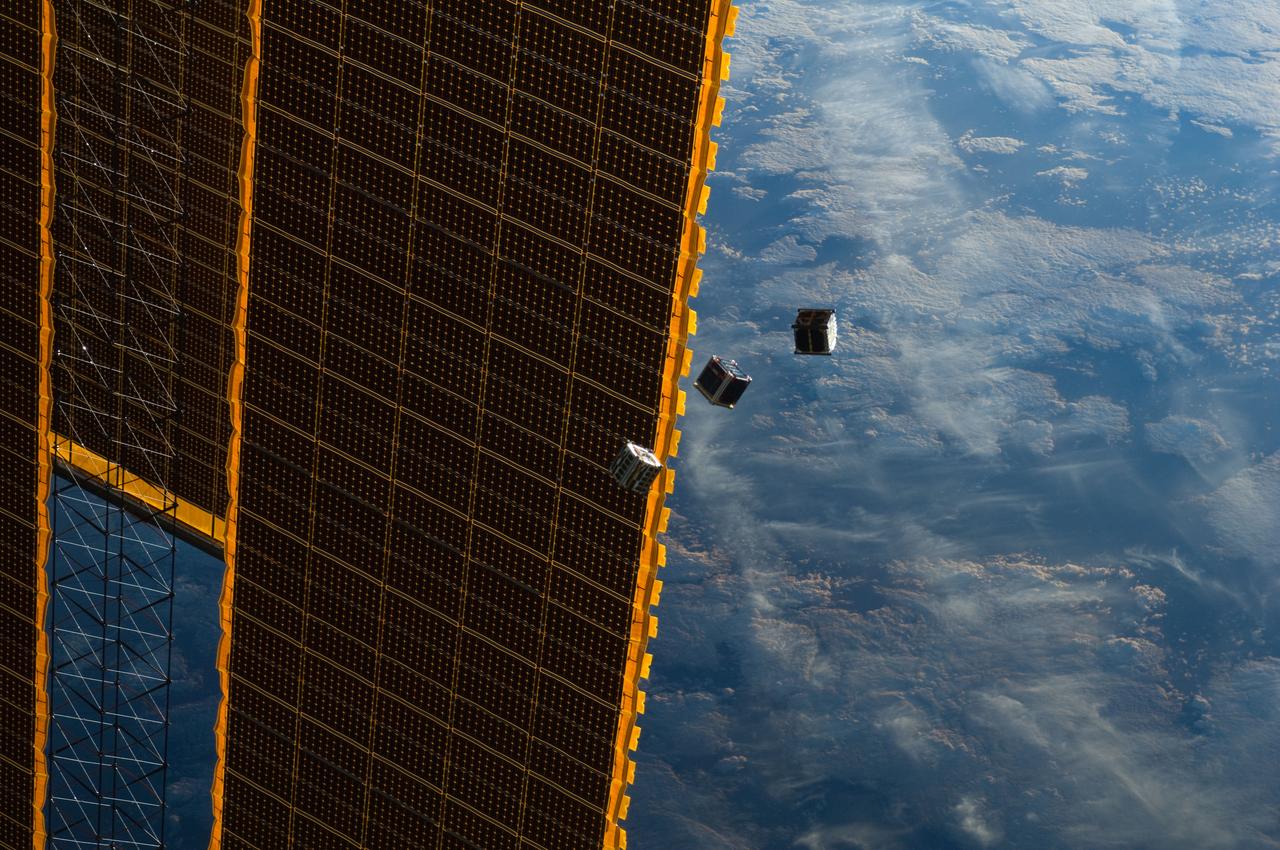
On August 13, 2026, space telecommunications reached a commercial milestone as AST SpaceMobile successfully deployed its first operational constellation of five commercial BlueBird satellites into Low Earth Orbit.
Connecting an ordinary smartphone to an orbiting satellite 500 kilometers above Earth has historically been considered an impossible engineering problem. Smartphones are equipped with tiny, low-gain omnidirectional antennas transmitting at fractions of a watt. To capture these faint signals without frying cellular receivers, satellite antennas must possess enormous apertures and precise beamforming capabilities.
AST SpaceMobile solved this physics challenge by engineering the largest unfolding commercial communications arrays in space history. Launched tightly folded inside a standard Falcon 9 fairing, each BlueBird satellite unfurls in orbit into a massive 693-square-foot planar array comprising thousands of micrometer-scale beamforming transceiver modules.
Because the phased array operates as a software-defined radio, it generates hundreds of agile cellular spot beams that project standard 3GPP LTE and 5G cellular frequencies directly to ground user equipment. Telemetry tests conducted over Texas and Hawaii confirmed download speeds exceeding 21 Mbps directly to unmodified iPhone and Samsung Galaxy devices, supporting seamless voice calls, web browsing, and 4K video streaming.
With commercial service activation greenlit by the FCC, direct-to-cell satellite connectivity is poised to permanently eliminate global cellular connectivity dead zones.